
DIGITRAN Blog
Product Examples, Applications, Success Stories, and more
Get some inspiration from our blog when we take on different topics of the printing industy. From applications and examples of the DIGITRAN technology to more general content on printing. Besides detailed articles you will also find short posts and application ideas, representing the versatility of digital printing.
Textile printing
There were no posts to find. Please try it again.
Packaging printing
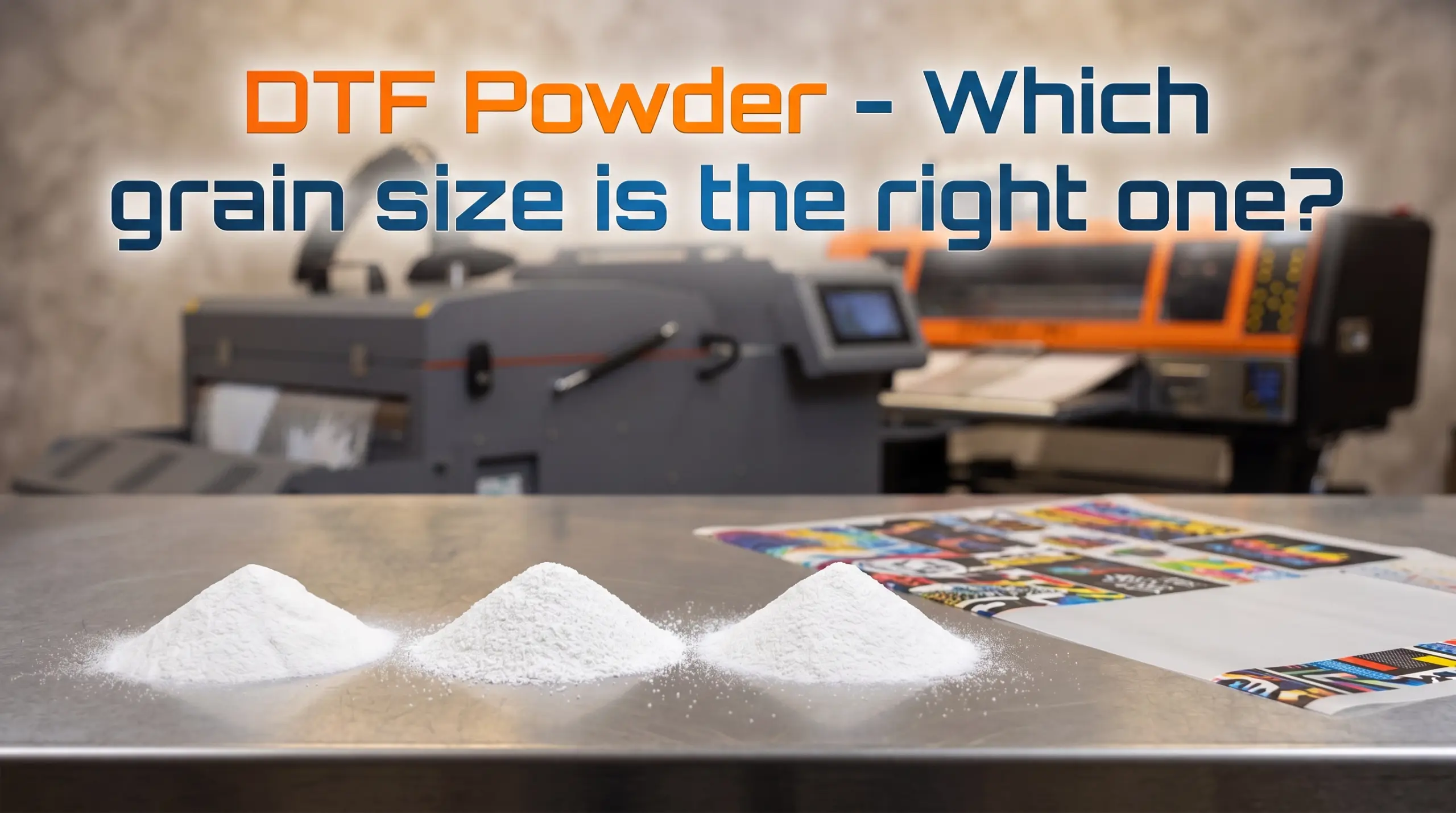
Choosing the Right DTF Adhesive Powder: Fine, Medium, or Coarse?
DTF Adhesive Powder – Fine, Medium, or Coarse? Choosing the right DTF adhesive powder determines adhesion, texture, and detail sharpness – and whether a design will survive the first wash. This guide shows which grain size works best with which fabric, how dosage and press temperature interact, and what tricks you can use to avoid costly printing errors. Practical knowledge for anyone who produces DTF transfers reliably.

UV-DTF Printing? What It Is and How It Works – A Quick Guide!
What is UV-DTF and how is it used? We’ll explain it quickly and easily!
Welcome to the fascinating world of UV-DTF printing—the perfect blend of stickers and high-quality finishing. Dive into our overview of the process—from the innovative UV-DTF printer to the perfect application. Discover how this technology is revolutionizing the world of printing for DIY, hobbies, promotional materials, and special projects!

DTF for sportswear
How can sports jerseys and functional shirts be customized without compromising performance?
Customized logos, names or numbers are standard today – but there are many challenges, especially with polyester and elastic fabrics: Sensitivity to heat, color gradients and lack of stretch. In our blog, we show how modern heat transfers overcome these hurdles and what is important to ensure that design and function work together perfectly.

CMYK, RGB, LAB? – Understanding color spaces!
Understanding color spaces. CMYK, RGB or Lab are tools with which you can ensure that print and expectation match.When it comes to printing, the color space is something you should know. Because only if you are familiar with color spaces can you translate the color you see into the right print color. Especially with digital printing technology, this knowledge is worth its weight in gold.

What is DTF printing?
What is DTF? We explain it!
Welcome to the fascinating world of DTF printing, where flexibility and quality come together. Dive into our detailed insight into the process – from the innovative DTF printers to the automatic powder shakers to the transfer press. Discover how this technology is redefining the boundaries of printing.

Screen printing vs. digital transfer printing
Revolutionizing product decoration: digital transfer printing versus screen printing.When it comes to printing on products, choosing the right printing technology is crucial to achieving an impressive and vibrant result. While screen printing has long been a conventional choice, digital transfer printing stands out as a revolutionary alternative, offering unrivaled quality and versatility.
DTF Printer Buying Guide
Thinking about buying a DTF printer? The world of Direct to Film (DTF) printing offers a versatile and profitable method for transferring high-quality, full-color designs onto various textiles such as apparel, bags and more. In this comprehensive guide, we will ask important questions and provide valuable insights to help you make an informed decision about purchasing a DTF printer.

Full-Color Digital Transfers by DTF Printing
The solution for custom designs on t-shirts, hoodies, bags, sportswear and workwear: DTF Digital Transfers.
Thanks to the combination of digital printing and heat transfer technology, textile transfers can be printed in small quantities, full-color and in the shortest possible time. Thus, the outstanding opacity and feel known from plastisol and screen printed transfers is now also available in small quantities.

HEAT, TIME, AND PRESSURE – The Holy Trinity of Heat Transfer Applications
Besides many other factors that can influence the heat transfer process, the three most important ones are heat, time, and pressure. No matter if it is a textile transfer or a transfer for packaging applications, you should know about the effect of these parameters and how a transfer is affected by them.

Hot Peel, Hot Split, or Cold Peel Heat Transfers
Textile heat transfers come in three technologies when it comes to peeling. This can be “hot peel”, “cold peel” or “hot split”. But what is the difference between them?
For further inspiration, news, machines, and product launches feel free to follow us on social media.


